
If the AI Bubble Pops, What Happens to AI Search? A Technical Risk Map for SEO and GEO

Key takeaways October’s drop was a real AI-stock correction, not a market-wide crash. The money question is capex versus returns, and it is still open. If the bubble pops, the layer that decides the damage is debt, not stock prices. Watch private credit and data center financing. Google’s AI surfaces are funded by search profits. […]
Google admits AI Mode earns less than regular search — what it means for your traffic

Key takeaways Google’s Search & Other revenue hit $63.35B in Q3 2026, up 12% year-over-year but roughly $1.5B below analyst estimates of ~$64.85B, according to 24/7 Wall St.. CBO Philipp Schindler confirmed AI Mode’s lower monetization contributed to the miss — but named foreign exchange (FX), not AI Mode, as the single largest driver; the […]
Semantic SEO and Topical Authority, in Plain English

Key takeaways Semantic SEO means optimizing for topic meaning and entity relationships, not keyword frequency. Topical authority is what you earn when search engines consistently treat your site as a trusted source on a subject. Google’s Hummingbird (2013), RankBrain (2015), and BERT (2019) shifted ranking from word-matching to meaning—so covering a topic comprehensively now matters […]
What Building an AI Video Pipeline Taught Me About Cost, Reliability and Control
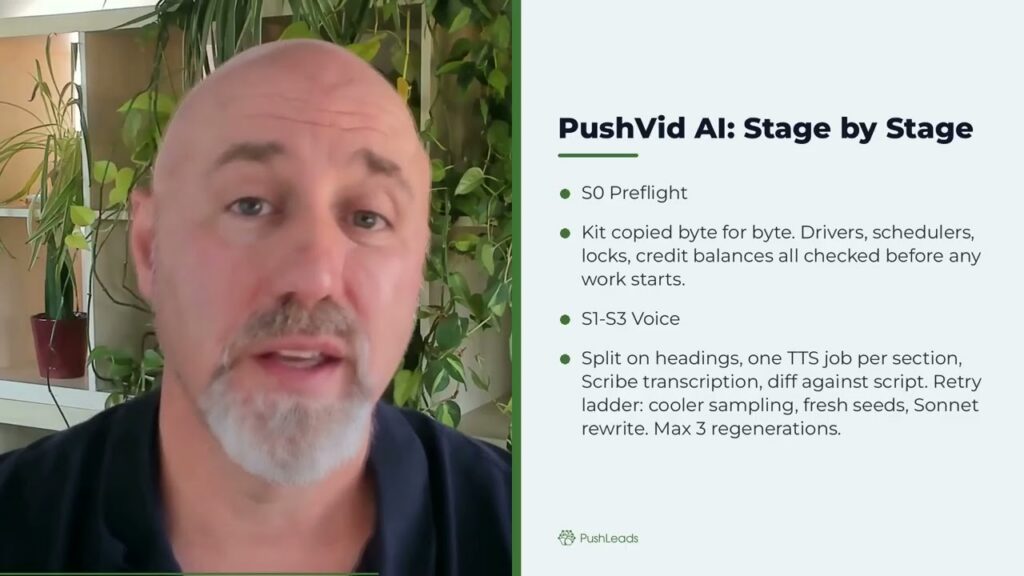
Key takeaways Production cost for an AI avatar video runs about $4; all-in cost including supervision and automated fixes is $9.83, with supervision and fixing alone accounting for 61% of total spend over seven days. n8n is only a webhook router and audit log; roughly 190 JavaScript and Python drivers stored in Postgres do the […]
Why YouTube Mentions Now Predict AI Visibility Better Than Backlinks

Brand mentions, especially on YouTube, correlate with AI visibility far more than backlinks. What the data says and a mention-first checklist for local businesses.
How to Show Author Expertise and E-E-A-T When Anyone Can Generate a Page

Key takeaways E-E-A-T is not a direct ranking factor; it trains Google’s quality algorithms indirectly through human rater feedback — so surface signals alone are never enough. Trust is the center of the E-E-A-T diagram; without it, experience, expertise, and authoritativeness cannot compensate. The sameAs property in Person schema connects your on-site author bio to […]
We Undercounted Our AI Video Citations: A Follow-Up on Slideshows, AI Avatars and Real Presenters

In early October we published a look at whether YouTube videos get cited in AI search, based on our own channel. The honest answer from that first pass was “rarely”: only a handful of our slideshow videos showed up in AI answers. Three weeks later we know that number was wrong, and the reason it […]
Entity-Based SEO Explained for Business Owners

Key takeaways An entity is a named thing—person, business, place, product, or concept—that search engines store as a node with attributes and relationships, not just a string of keywords. Google’s Knowledge Graph and AI systems like ChatGPT reason about entities, so being recognized as one is the foundation of visibility in AI-served answers. Schema markup […]
What Is AI Search Content Optimization (AISCO)?

Key takeaways AISCO (AI Search Content Optimization) is a term I use at PushLeads to describe the full practice of making content retrievable, answer-worthy, and citable across AI systems—Google AI Overviews, ChatGPT, and Perplexity. SEO earns rankings; GEO (Generative Engine Optimization) targets citations in AI-generated answers; AISCO is the unified discipline that covers both, plus […]
How to Measure AI Search Visibility for a Small Business (What to Track Monthly)

Key takeaways Traffic alone misses most AI exposure—AI clicks show as direct in Google Analytics, so you need citation tracking alongside GA4 and Google Search Console data. Track four things monthly: brand mentions in AI answers, citation frequency, share of voice versus competitors, and branded-search lift in GSC. Keep a fixed prompt set. Changing prompts […]